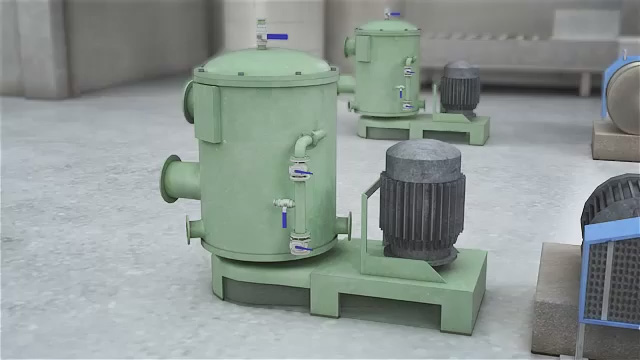
OCC plants convert recycled old corrugated containers into pulp that can be used on paper and board machines to make valuable pulp and paper products. After repulping, the OCC pulp contains some contaminants, such as staples, glass debris, and sand, as well as fiber flakes and bundles that were not separated into individual fibers during repulping. To remove these undesirable materials, the pulp slurry goes through one or more screening processes to remove the contaminants that are larger than fibers. This course describes the initial, “coarse screening” process used to remove the largest contaminants from the OCC pulp.
• Explain the purpose of coarse screening
• Describe why coarse screening systems often use multiple stages
• Identify and describe the major components of cylindrical screens
• Identify and describe the major components of disk screens
• Describe the process flows for coarse screening
• Identify the characteristics of screen openings which influence screen performance
• Explain why a different design is typically used in the final stage of coarse screening
• List safety hazards and guidelines associated with coarse screening systems