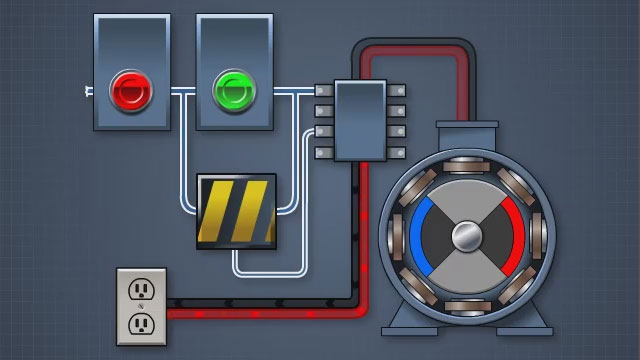
A small motor can be started by simply plugging it into an electrical receptacle or by using a switch or circuit breaker. A large motor requires a specialized switching unit called a motor starter or motor contactor. Once they are running, there are many other aspects to safe and efficient motor operation. Motor control refers to manual or automatic methods for starting, stopping, controlling speed, reversing, and protecting a motor. These controls are achieved using a variety of circuits, connections and sensors.
•Explain how circuits help control starting, stopping, reversing, speed control, motor protection, and safety
•Identify and describe common circuit types (start/stop, jogging, interlocking, multiple station, and sequencing)
•Differentiate between 2 and 3 wire start/stop circuits
•Differentiate between Permissive and Restrictive interlocks
Industrial Libraries
- Convergence Industrial Maintenance Library
- Industrial Complete
- Industrial Maintenance
- Industrial Maintenance - Electrical
- Industrial Premium