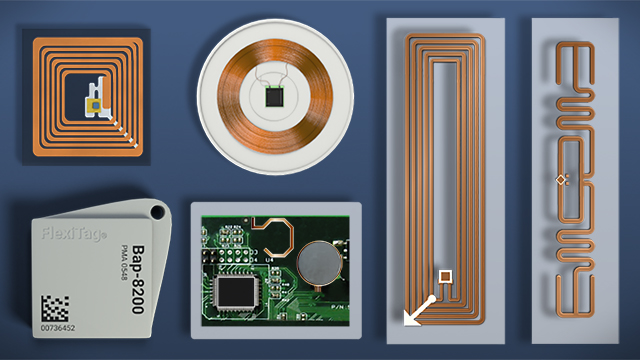
An RFID tag consists of an antenna that is connected to a data-containing integrated circuit. These small tags can be attached to almost any object, thereby giving it a unique identification number which can be read without contacting the object. Tags can be passive, operating on the energy of the radio waves of the reader, or active, which means they are powered by a built-in battery. RFID tags come in just about every shape and size imaginable. The packaging is determined by their intended use and the frequency at which they operate.
• List the primary components of an RFID system
• List the primary components of an RFID tag
• Describe the advantages and disadvantages of the different frequencies at which RFID systems operate
• Describe the differences between passive tags and active tags
• Describe what information is typically stored in memory on an RFID tag
• Describe the role of an antenna in a tag
Industrial Libraries
- Convergence Industrial Maintenance Library
- Core Industrial Skills
- Industrial Complete
- Industrial Maintenance
- Industrial Premium